
The Best And Worst Brain-Healthy Foods For Seniors
The foods people eat can affect more than physical health. Diet also plays a role in brain function, memory, and overall cognitive wellness. While no single food can prevent age-related memory changes, certain foods may support brain health over time. For seniors, making thoughtful food choices can be an important part of maintaining a healthy lifestyle and supporting long-term mental sharpness.
Best Foods for Brain Health
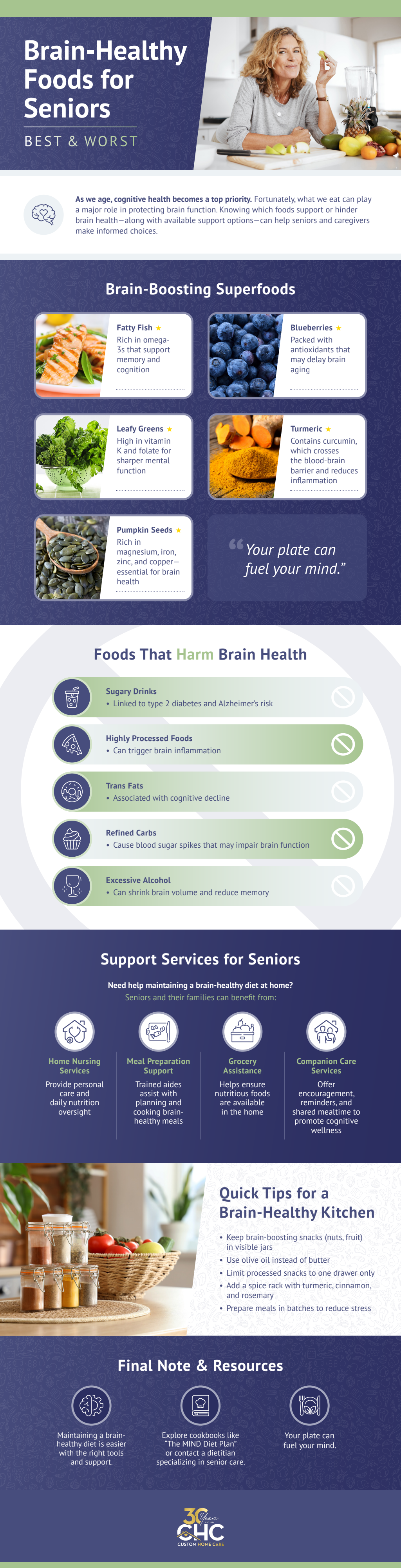
Several foods contain nutrients that support healthy brain function. Fatty fish such as salmon, sardines, and trout provide omega-3 fatty acids, which are linked to brain health. Leafy greens like spinach, kale, and collard greens contain vitamins and antioxidants that may help support cognitive function.
Berries are another strong choice. Blueberries, strawberries, and blackberries contain compounds that may help protect brain cells from damage. Nuts and seeds also provide healthy fats and nutrients that contribute to overall wellness.
Foods That May Be Less Helpful
Some foods may have a negative impact on overall health when consumed frequently. Highly processed snacks, sugary desserts, and sweetened beverages often contain large amounts of added sugar. Regular consumption of these foods may contribute to health conditions that can affect cognitive wellness over time.
Foods high in trans fats and heavily processed fried foods may also be worth limiting. These items often provide fewer beneficial nutrients compared to whole food alternatives. Reducing highly processed foods can create more room in the diet for nutrient-rich choices.
The Importance of Balanced Eating
Brain health is influenced by overall eating patterns rather than individual foods alone. A balanced diet that includes fruits, vegetables, lean proteins, healthy fats, and whole grains provides a wide range of nutrients that support the body and mind. Staying hydrated is also important, as dehydration can affect concentration and mental clarity. Regular meals may help maintain stable energy levels throughout the day, which can support daily activities and cognitive performance.
Nutrition and Long-Term Cognitive Care
Food choices become increasingly important as people age. Families supporting loved ones receiving dementia care often pay close attention to nutrition because a healthy diet can help support overall quality of life. Consistent meal routines and nutrient-rich foods may contribute to better daily wellness and comfort.
Healthy eating is one of several lifestyle habits that can support brain function as people grow older. Choosing foods such as fish, leafy greens, berries, nuts, and whole grains may provide valuable nutrients that benefit cognitive health. At the same time, limiting heavily processed foods and excess sugar can support overall well-being. Small dietary changes made consistently can have a meaningful impact over time. Check out the infographic below for more information.