

The Sleep Position Spectrum: Finding Better Rest Through Proper Alignment
Sleep quality depends on more than the number of hours spent in bed. Body position throughout the night can influence spinal alignment, breathing, joint comfort, and overall sleep quality.
While there is no single best sleep position for everyone, understanding how different positions affect the body can help individuals make informed choices that support healthier rest.
Side Sleeping
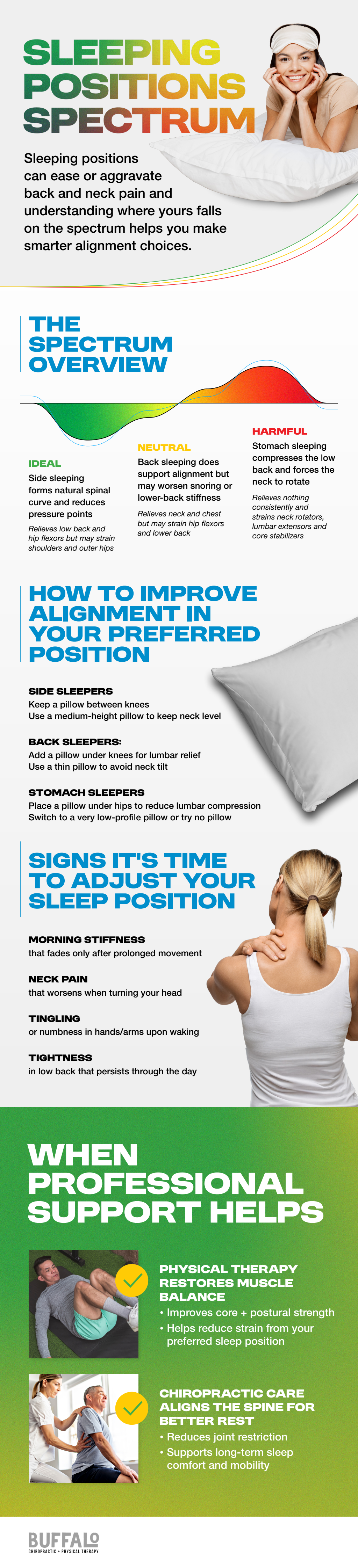
Side sleeping is one of the most common sleep positions and is often recommended for many adults. Keeping the spine in a neutral position with a supportive pillow between the knees may reduce pressure on the hips and lower back. A pillow that properly supports the neck also helps maintain alignment between the head and spine.
Some people who snore or experience mild sleep-disordered breathing may find sleeping on their side more comfortable than on their back. However, persistent sleep concerns should be evaluated by a healthcare professional.
Back Sleeping
Sleeping on the back distributes body weight evenly and may reduce pressure on certain joints. Placing a small pillow beneath the knees can help maintain the natural curve of the lower back and improve comfort.
This position may not be ideal for everyone. People with obstructive sleep apnea or frequent snoring may experience worsening symptoms while sleeping on their backs. Medical guidance is important if breathing interruptions occur during sleep.
Stomach Sleeping
Stomach sleeping generally places greater stress on the neck because the head remains turned to one side for extended periods. This position may also increase pressure on the lower back if the spine is not well supported.
Individuals who prefer sleeping on their stomachs may improve comfort by using a thinner pillow or no pillow under the head, depending on personal preference and guidance from a healthcare provider.
Supporting Healthy Sleep Habits
A supportive mattress and properly fitted pillow contribute to healthy sleep regardless of preferred position. Regular exercise, consistent sleep schedules, and limiting screen exposure before bedtime also support better sleep quality.
Some individuals experiencing ongoing neck or back discomfort may discuss their symptoms with qualified healthcare professionals, including providers who offer chiropractic care, as part of a broader evaluation to determine appropriate treatment options.
Finding the most comfortable sleep position often requires small adjustments rather than dramatic changes. Paying attention to spinal alignment, pillow support, and individual comfort can contribute to more restful sleep and fewer aches upon waking. If pain or sleep disturbances continue despite these adjustments, consulting a healthcare professional can help identify underlying causes and appropriate treatment options. Check out the infographic below for more information.






Great content. Looking forward to reading more from this site. https://traderzo.com/financial-literacy-essential-skills-for-better-money-management/
This is a great reminder that physical alignment directly impacts cognitive function. Optimal rest is key for sharp decision-making, whether it’s navigating complex professional services or enjoying some downtime. After prioritizing sleep, a fun way to maintain focus is exploring digital entertainment like a {{COMMENTLINK}} skyph slot download {{COMMENTLINK}}. skyph slot download
Just had a massive win here and the withdrawal process was a breeze. Great customer support too. Give jun885bet a go if you are looking for action