Why Play Matters For A Growing Brain
Play can look simple from an adult perspective. A child stacks blocks, invents a game with stuffed animals, or spends ten minutes moving sand between containers. Beneath those activities, the brain is processing language, movement, memory, emotions, and new information. Regular opportunities to play give young children a practical way to develop skills that later support learning and everyday independence.
Problem-Solving Happens Naturally During Play
Open-ended activities encourage children to experiment. Consider a toddler trying to build a tall block tower. When it falls, the child has to decide whether to use a wider base, rearrange the blocks, or start over.
That process exercises working memory, attention, and flexible thinking. Children learn that one unsuccessful attempt does not end the activity. They can change their approach and try again.
Adults can support this type of learning without immediately solving the problem. A question such as, “What could you try next?” keeps the child involved in finding the answer.
Pretend Play Exercises Language and Memory
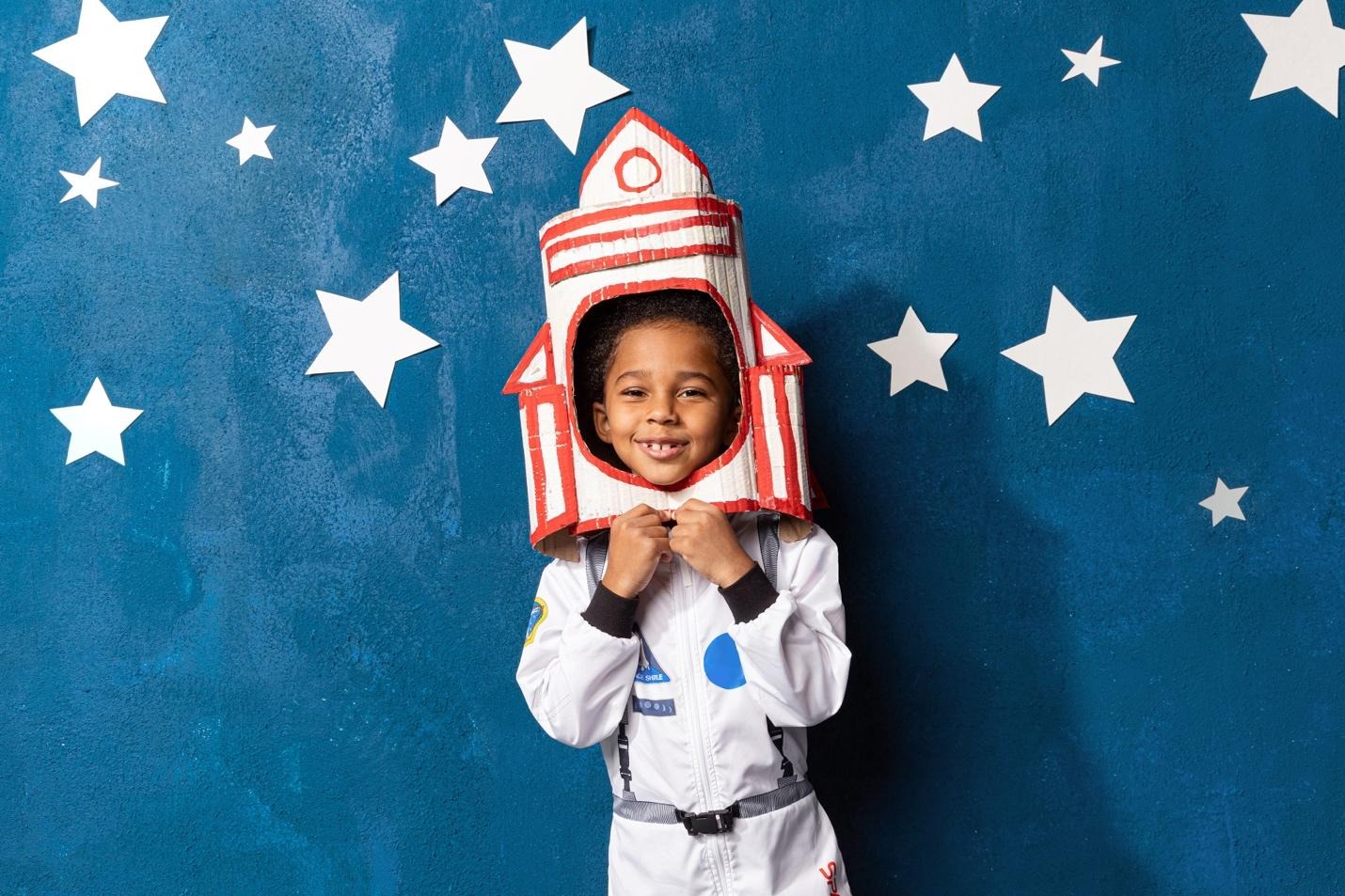
Pretending that a toy kitchen is a restaurant or a cardboard box is a bus requires children to create and remember an imaginary situation. They assign roles, develop simple storylines, and use language to communicate what is happening.
Playing with other children adds another layer. A child has to listen, respond, wait, and sometimes compromise when someone else changes the game.
These experiences can happen at home, during playgroups, or in a preschool for 2.5 year olds, where children may have regular opportunities to interact with peers and explore age-appropriate materials.
Physical Play Builds Brain-Body Connections
Running, climbing, throwing, and balancing require the brain to continuously process information about movement and body position. Children practice coordination while judging distance, speed, and space.
Fine motor play develops different skills. Drawing, stacking small objects, using play dough, and completing simple puzzles require controlled hand movements and visual coordination. These abilities eventually contribute to tasks such as writing, dressing, and using utensils.
Social Play Provides Emotional Practice
Play does not always go smoothly, and those difficult moments have developmental value. Children may disagree about a toy, lose a game, or become frustrated when something does not work.
With appropriate adult support, these situations provide opportunities to practice waiting, expressing feelings, solving disagreements, and recovering from disappointment.
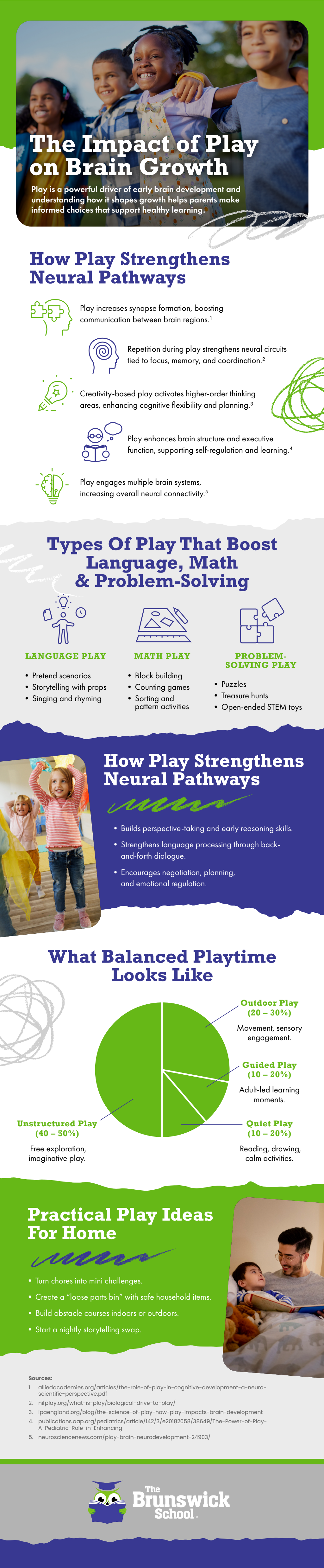
Play supports brain growth because it combines learning with action. Children do not need elaborate toys or tightly scheduled activities to benefit. Blocks, art supplies, outdoor spaces, household objects, and imaginative games can create meaningful learning opportunities. Giving children enough time to experiment, move, create, and interact with others allows important cognitive, physical, and social skills to develop through experiences that feel natural to them. Check out the infographic below for more information.