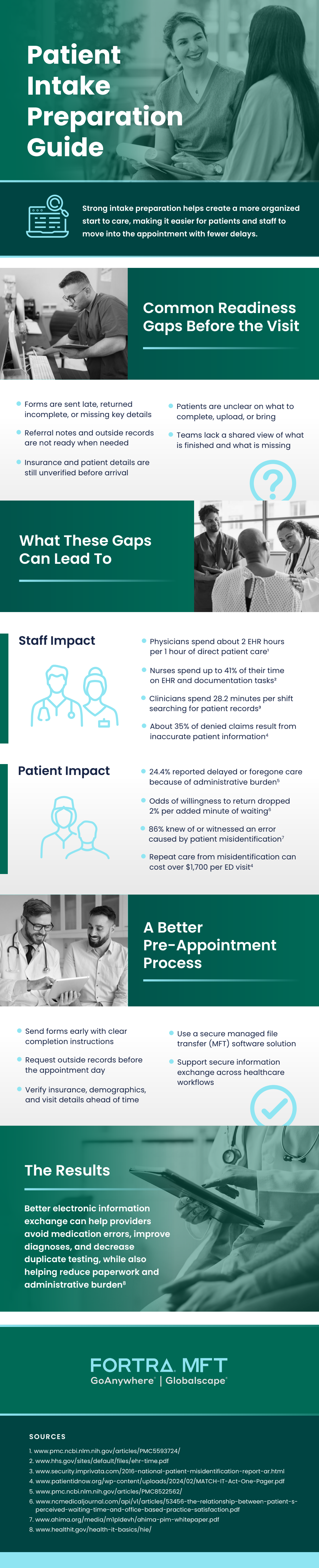

Be Ready Before You Arrive: A Patient Intake Preparation Guide
A healthcare appointment often begins before a patient enters the exam room. The intake process helps providers gather important information about medical history, medications, insurance coverage, and current health concerns.
Arriving prepared can save time, reduce confusion, and help healthcare professionals focus on providing quality care. A few simple steps before an appointment can make the entire process more efficient for both patients and providers.
Gather Important Documents
Having the right information available can make check-in much easier. Patients should bring a photo ID, insurance card, and any required referral documents. It is also helpful to have a list of current medications, including prescription drugs, over-the-counter products, and supplements.
Medical records from other providers may be useful if they relate to the reason for the visit. Bringing these documents can help reduce delays and improve communication between healthcare teams.
Prepare Your Medical History
Many intake forms ask questions about past and current health conditions. Before the appointment, take a few minutes to review major surgeries, allergies, chronic illnesses, and family health history. Writing this information down can help prevent important details from being forgotten during the visit.
Patients should also be ready to discuss recent symptoms, when they started, and any factors that may affect them.
Complete Forms in Advance
Many healthcare offices provide intake paperwork before the appointment. Completing forms ahead of time can shorten waiting room delays and allow staff to review information before the visit begins.
Online patient portals may also provide a convenient way to update contact details, medical history, and insurance information. Accurate information helps healthcare providers make informed decisions during the appointment.
Understand Privacy and Information Handling
Patients often share sensitive personal and medical information during intake. Healthcare organizations follow specific policies regarding privacy, record management, and data security compliance to help protect patient information.
Reviewing consent forms and privacy notices can help patients understand how their information is collected, stored, and shared. Asking questions about these policies is appropriate if any concerns arise.
Make a List of Questions
Appointments can move quickly. Creating a list of questions before arriving can help patients remember important topics they want to discuss. Concerns about symptoms, medications, treatment options, or follow-up care should be written down ahead of time. This preparation can lead to more productive conversations with healthcare providers.
A smooth intake process begins with preparation. Bringing the right documents, reviewing medical history, completing forms early, and preparing questions can help patients get more value from their appointment. Taking these simple steps can improve communication and help healthcare visits run more efficiently from the start. Check out the infographic below for more information.