
What Pool Chemicals May Be Doing to Your Lungs
Swimming pools help people stay active and cool during warm weather, though the chemicals used to maintain clean water can sometimes affect respiratory health.
Chlorine and other pool treatments play an important role in controlling bacteria and algae, but strong chemical exposure may irritate the lungs, especially in enclosed or poorly ventilated spaces.
How Pool Chemicals Affect Breathing
Chlorine itself is commonly used to disinfect pool water. Problems often develop when chlorine combines with sweat, body oils, urine, or personal care products in the water. This reaction creates chemical compounds called chloramines.
Chloramines can rise into the air above the pool surface, especially around indoor pools with weak ventilation. Breathing in these chemicals may irritate the nose, throat, and lungs.
People exposed to high levels of chloramines sometimes experience coughing, wheezing, chest tightness, or shortness of breath. Eye irritation and skin dryness may appear at the same time.
Indoor Pools Carry Greater Risk
Indoor pools usually create a higher respiratory risk than outdoor pools because chemicals remain trapped within enclosed air. Poor airflow allows chloramines to build up near the water surface, where swimmers breathe most heavily.
Warm temperatures and humidity may also increase irritation inside indoor facilities. Pool staff and maintenance workers often face longer exposure periods throughout the day, especially during chemical handling or cleaning.
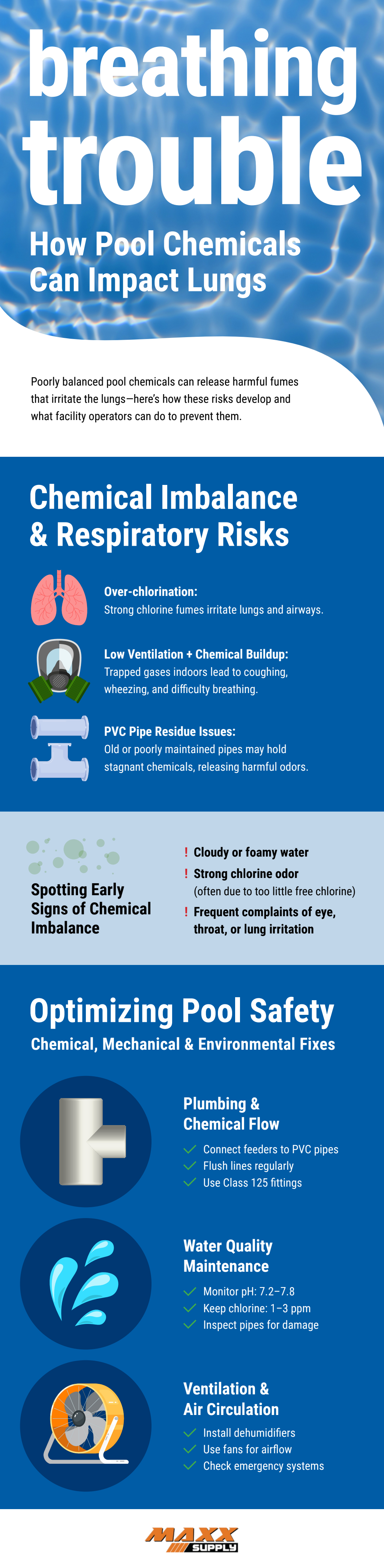
Ventilation systems play a major role in indoor pool safety. Proper air circulation helps move chemical vapors away from swimmers and staff while improving overall air quality inside the building.
Warning Signs to Watch For
Respiratory symptoms linked to pool chemicals often appear shortly after exposure. Common warning signs include coughing, throat irritation, wheezing, and burning sensations in the nose or chest.
People with asthma or existing lung conditions may notice stronger reactions. Children can also become more sensitive because their lungs are still developing.
Strong chemical smells may signal poor water balance or ventilation problems. Contrary to popular belief, a heavy chlorine odor does not always mean the pool is cleaner. It may actually indicate high chloramine levels in the water and air.
Reducing Chemical Exposure
Good pool maintenance helps lower respiratory risk while keeping water safe for swimmers. Proper chlorine levels, balanced pH, and regular water testing all help reduce chloramine buildup.
Showering before swimming also makes a difference because it removes sweat, lotions, and oils that react with chlorine in the water. Encouraging bathroom breaks for children may help reduce contamination as well.
Pool equipment and plumbing systems also affect water quality. Clean filtration systems and properly functioning circulation lines support a healthier chemical balance. Some pool owners reviewing maintenance supplies or PVC pipes for sale may focus on improving water circulation during repairs or upgrades.
Pool chemicals help keep swimming areas clean, though improper balance or ventilation can affect respiratory health over time. Regular maintenance, clean water practices, and proper ventilation all help reduce exposure while creating safer swimming conditions for families and frequent swimmers. Look over the infographic below to learn more.